Post-Coital Bleeding: Causes, When to Worry & Treatment – Dr Arpana Jain, Gynaecologist in North Delhi

Noticing blood after intercourse can be alarming, and it’s one of the more common concerns women bring to a gynaecology consultation — often hesitantly, and sometimes only after ignoring it for months. The good news: post-coital bleeding (bleeding after sex) has many possible causes, and most of them are not serious. But because a small number of causes do need prompt attention, it’s never something to simply wait out.
With over 25 years of experience in Obstetrics & Gynaecology, Dr Arpana Jain, practising at Fortis Hospital, Shalimar Bagh, North Delhi, regularly evaluates and treats post-coital bleeding for women from Pitampura, Ashok Vihar, Model Town, Rohini, and surrounding areas. Here’s a clear, medically accurate breakdown of what it is, why it happens, and when to seek care.
What Is Post-Coital Bleeding?
Post-coital bleeding refers to any vaginal bleeding or spotting that occurs during or after sexual intercourse, outside of a woman’s normal menstrual period. It can range from light pink spotting to noticeable bleeding, and can happen as a one-off event or recur with each episode of intercourse.
Common Causes of Post-Coital Bleeding
Cervical Ectropion (Cervical Erosion)
One of the most common and harmless causes, especially in younger women and those on hormonal contraception or who are pregnant. The delicate glandular cells that normally line the inside of the cervical canal extend onto the outer surface of the cervix, where they bleed more easily on contact.
Vaginal Dryness or Atrophy
Reduced natural lubrication — common during breastfeeding, after menopause, or due to certain medications — can cause micro-tears in the vaginal walls during intercourse, leading to spotting.
Infections
Sexually transmitted infections (such as chlamydia or gonorrhoea) and other vaginal or cervical infections can inflame tissue, making it prone to bleeding after contact. These often come with other symptoms like unusual discharge, odour, or discomfort.
Cervical or Endometrial Polyps
Small, usually benign growths on the cervix or inside the uterus can bleed easily when touched during intercourse. They are typically simple to remove.
Injury or Trauma
Vigorous intercourse, insufficient lubrication, or minor vaginal tears can cause bleeding that is unrelated to any underlying gynaecological condition.
Cervical Dysplasia or Cervical Cancer
This is the cause every gynaecologist screens for, precisely because early cervical cancer often has no symptoms other than post-coital bleeding. Persistent high-risk HPV infection can lead to abnormal cervical cell changes that bleed on contact, long before any other symptom appears. This is uncommon compared to the other causes above, but it is the reason this symptom should never be ignored.
Hormonal Contraception or IUD-Related Changes
Bleeding between periods, including after intercourse, is a known side effect in the first few months of starting hormonal birth control or after IUD insertion, and usually settles with time.
Pregnancy-Related Causes
In pregnant women, post-coital bleeding can result from the normal increase in cervical blood supply, or in rare cases may indicate a complication requiring evaluation — making prompt reporting to your obstetrician important.
When Should You See a Gynaecologist?
You should book a consultation if you experience:
- Any bleeding after intercourse that is new or recurring
- Bleeding accompanied by pelvic pain, unusual discharge, or a foul odour
- Post-coital bleeding after menopause
- Bleeding that occurs even without intercourse (irregular or breakthrough bleeding)
- You have not had a Pap smear or HPV test in the last 3 years
A simple rule of thumb: post-coital bleeding is common and usually not dangerous, but it should always be evaluated at least once by a gynaecologist rather than assumed to be harmless — because the only way to rule out a serious cause is a proper examination.
How Is Post-Coital Bleeding Evaluated?
- Detailed history — timing, pattern, contraception use, sexual history, and associated symptoms
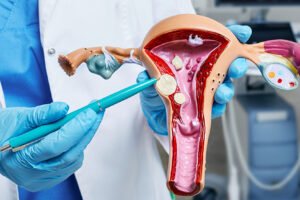
- Pelvic examination — to visually inspect the cervix and vagina for ectropion, polyps, infection, or lesions
- Pap smear and HPV test — to rule out cervical cell changes, especially if not done recently
- Swabs or infection screening — if infection is suspected based on discharge or symptoms
- Transvaginal ultrasound — to check the uterus and endometrium if polyps or other structural causes are suspected
- Colposcopy — a closer, magnified examination of the cervix if the Pap smear or visual exam shows anything abnormal
Treatment Options
Treatment depends entirely on the underlying cause:
- Cervical ectropion: Often needs no treatment; can be managed with cautery/cryotherapy if bleeding is bothersome
- Vaginal dryness: Lubricants, vaginal moisturisers, or topical oestrogen (especially post-menopause)
- Infections: Targeted antibiotics or antifungal treatment based on the specific organism identified
- Polyps: Simple outpatient removal, usually with quick recovery
- Abnormal Pap smear/cervical changes: Further evaluation with colposcopy and, if needed, minor procedures to treat precancerous changes before they progress
- Contraception-related bleeding: Often resolves on its own; your gynaecologist may adjust the method if it persists
Personalised Evaluation for Post-Coital Bleeding — Dr Arpana Jain, North Delhi
Bleeding after intercourse deserves a proper look, not guesswork or online self-diagnosis. With decades of experience managing cervical health, infections, and gynaecological bleeding disorders, Dr Arpana Jain offers thorough evaluation, Pap smear/HPV screening, and treatment for post-coital bleeding at Fortis Hospital, Shalimar Bagh, North Delhi — easily accessible for patients from Pitampura, Ashok Vihar, Model Town, Rohini, and nearby North Delhi neighbourhoods.
To book a consultation or learn more, visit https://drarpanajain.com/
This article is for general educational purposes and is not a substitute for personalised medical advice. Please consult Dr Arpana Jain or your gynaecologist for guidance specific to your health.
Related posts